From early product to global architecture

Role
Product Designer
Company
InDebted
Type
Research, UX, UI, Product management, Design system, Rebranding
Impact
83% conversion improvements
InDebted is a fast-growing start-up focused on expanding into new markets and increasing revenue. To achieve the founder’s vision of becoming the world’s most trusted collections agency, the business needed to find new ways to improve product performance
Some of our clients



Challenge
With $117M locked in active plans but just 9% completed, the challenge was to turn payment plans from a leaky funnel into a growth engine.
My role
Hybrid Product Designer / Acting PM, bridging compliance, engineering, and stakeholders.
I led:
Discovery, scoping, and feature design
15 customer interviews (AU + US)
Problem framing with Head of Product
Translating insights into product direction

Research method and finidings
Explore and understand how we can improve payment plan experience.
👉
User selection criteria and Askable recruitment

Moderated interviews (8 AU, 7 US)
45 minutes session
Balance between $50 to $250
30 to 90 days aged accounts
Afterpay and Klarna customers (BNPL)
Customers currently on payment plans
🧠 Key insights
Budget-first
Customers set plans around living expenses, not duration.
Cognitive overload
Too many steps and unclear info → backtracking.
Trust and control
Customers wanted clear obligations and self-service flexibility.
Where the current flow falls short
By analysing customer behaviour and UI patterns, we identified key opportunities to improve the plan setup flow:
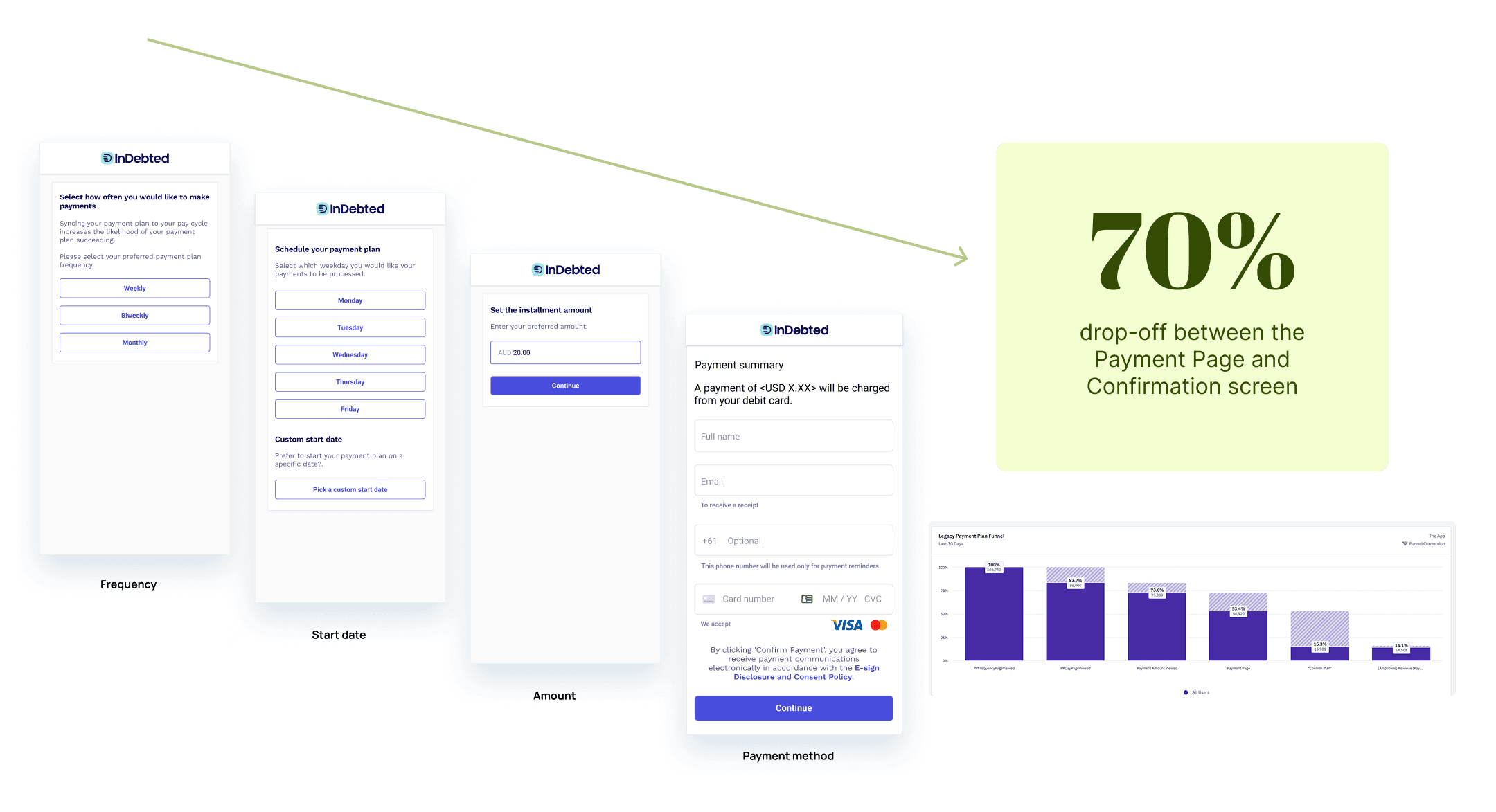
Guardrails: Some customers created plans lasting over 19 years, highlighting the need for clearer limits.
Flow complexity: Amplitude showed drop-off was driven by too many steps in the journey.
Backtracking: Customers frequently clicked back and forth, trying different amounts and frequencies a sign the UI wasn’t guiding them effectively.
Learning from MVP
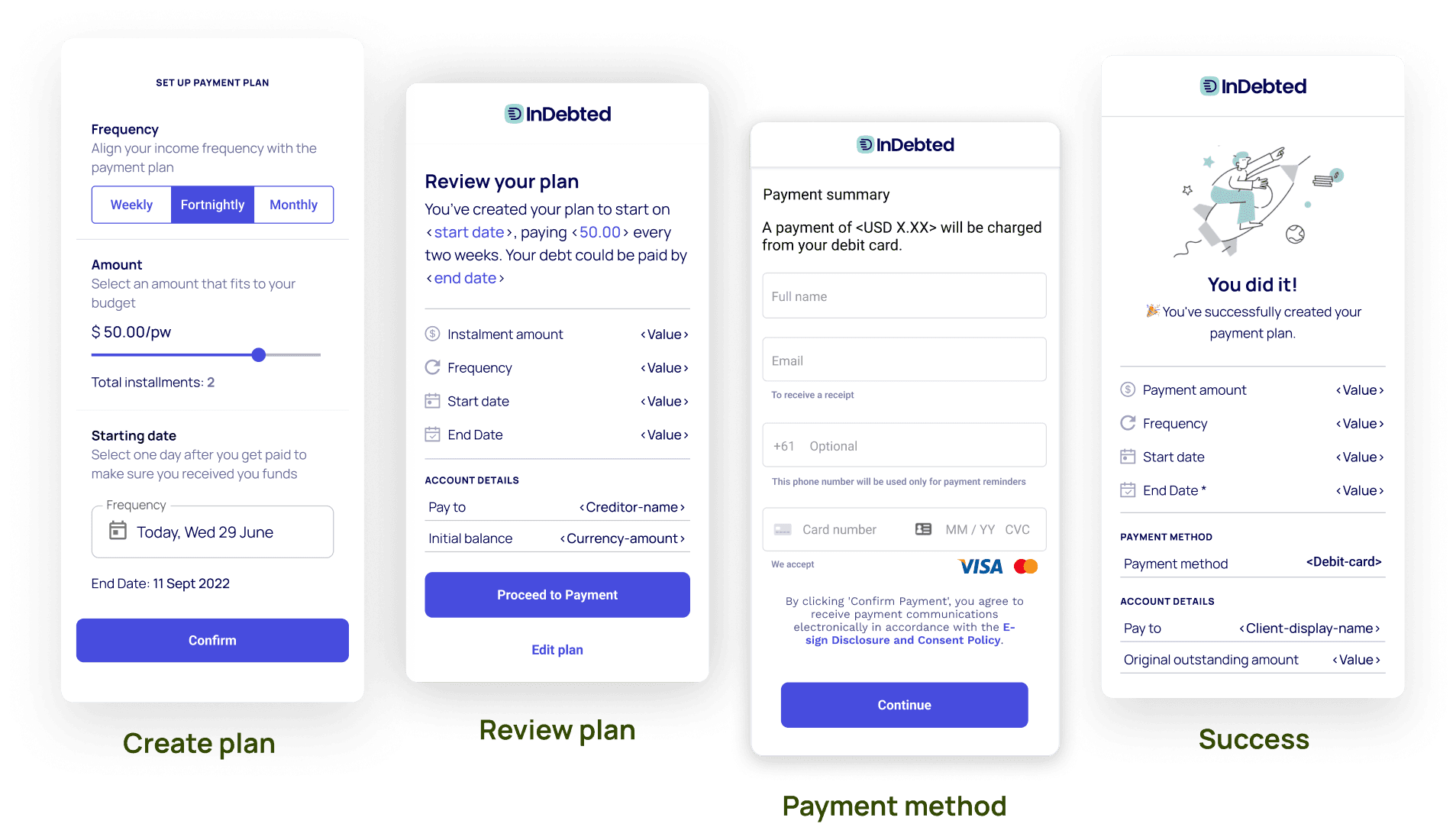
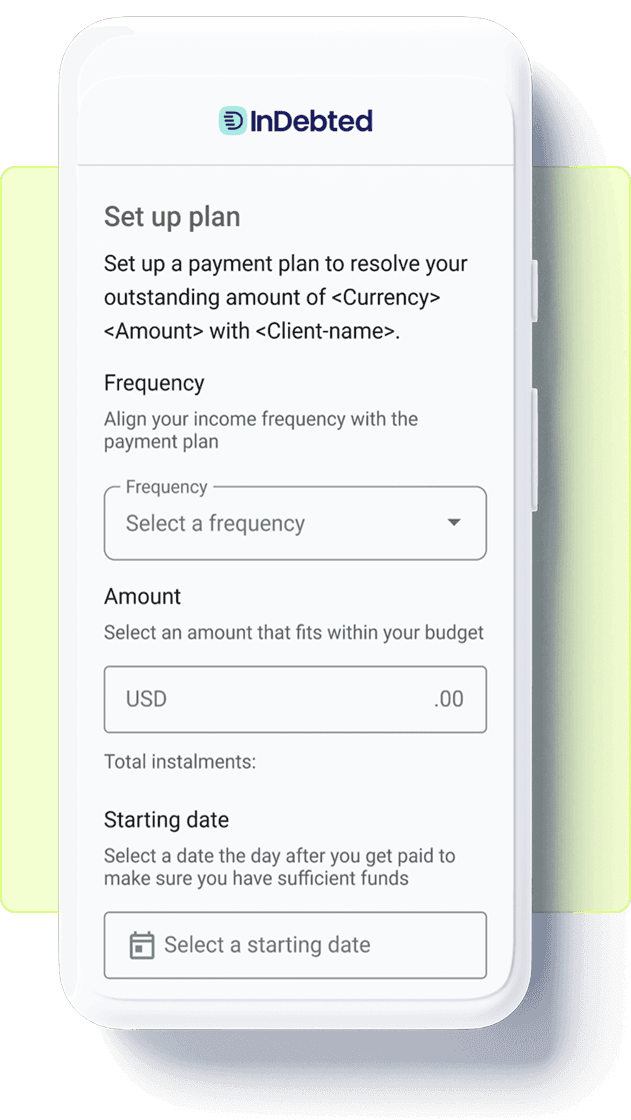
The first release had to cut critical elements like toggles, sliders, and upfront summaries. While it simplified delivery, these tradeoffs limited the impact and the metrics didn’t shift as expected. This highlighted the importance of balancing feasibility with user needs even small compromises in control and clarity can blunt adoption.
~ +0.9% uplift in conversion only. 👎
Alignment & Architecture Reset
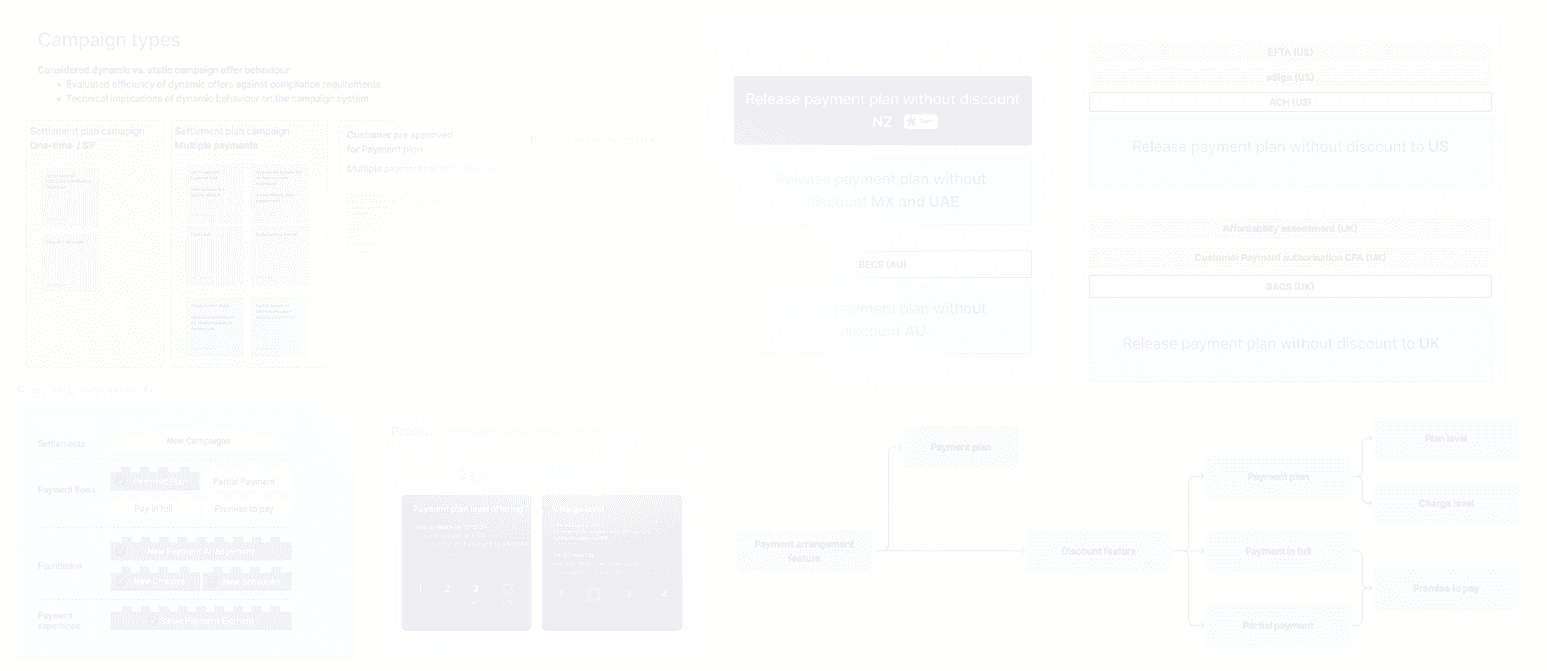
The MVP showed UX fixes weren’t enough.
Through cross-functional workshops, we:
Clarified client, regulator, and customer needs
Prioritised constraints blocking growth
Aligned on a north star vision for scalable payments
With exec backing, we committed to a deep architectural reset.
🎩
Product manager hat
I partnered with a Staff Engineer and an Engineering Manager, backed by the CPO, to ensure we built a solution that was future-proof and aligned with both client and customer needs. Without this, the existing limitations would have continued to slow growth, block scaling into new regions.
Unlocking New Capabilities
Once the new architecture was in place, we could finally build features the old system could never support. This wasn’t just a UX update it was a future-proof foundation that unlocked entirely new ways for customers to manage payments and for clients to recover faster.
New capabilities included:
Tiered settlements – breaking down large balances into structured tiers
“Promise to pay” arrangements – scheduling one-off commitments without a full plan
Abandoned cart recovery – re-engaging customers who didn’t finish setup
Discounts & flash sales – offering time-bound incentives safely
Flexible self-service plan management – empowering customers to adjust plans within guardrails
New Payment Plan & Rebrand
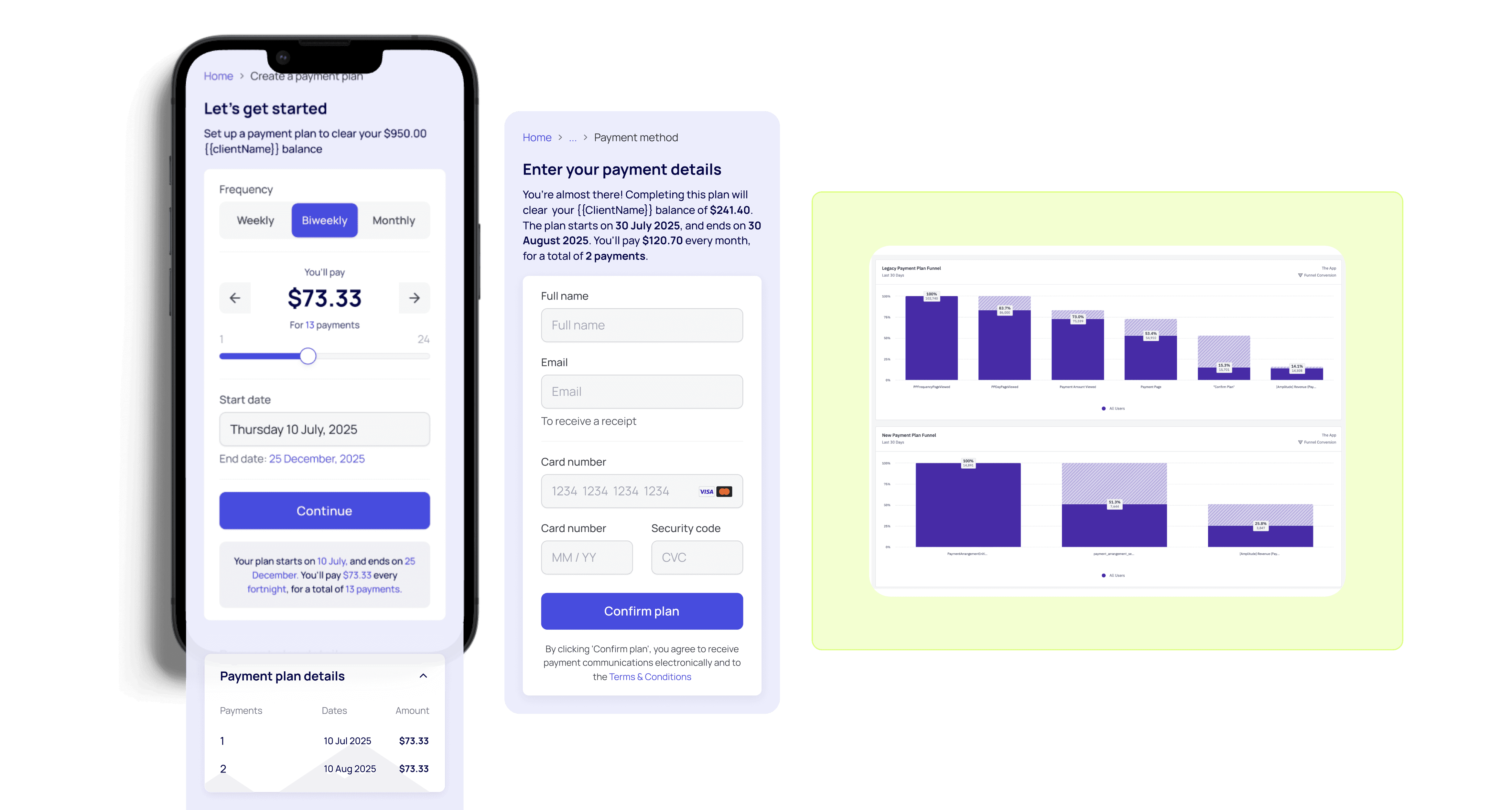
Once the new architecture was live and the front end modernised, we enhanced the payment plan experience itself.
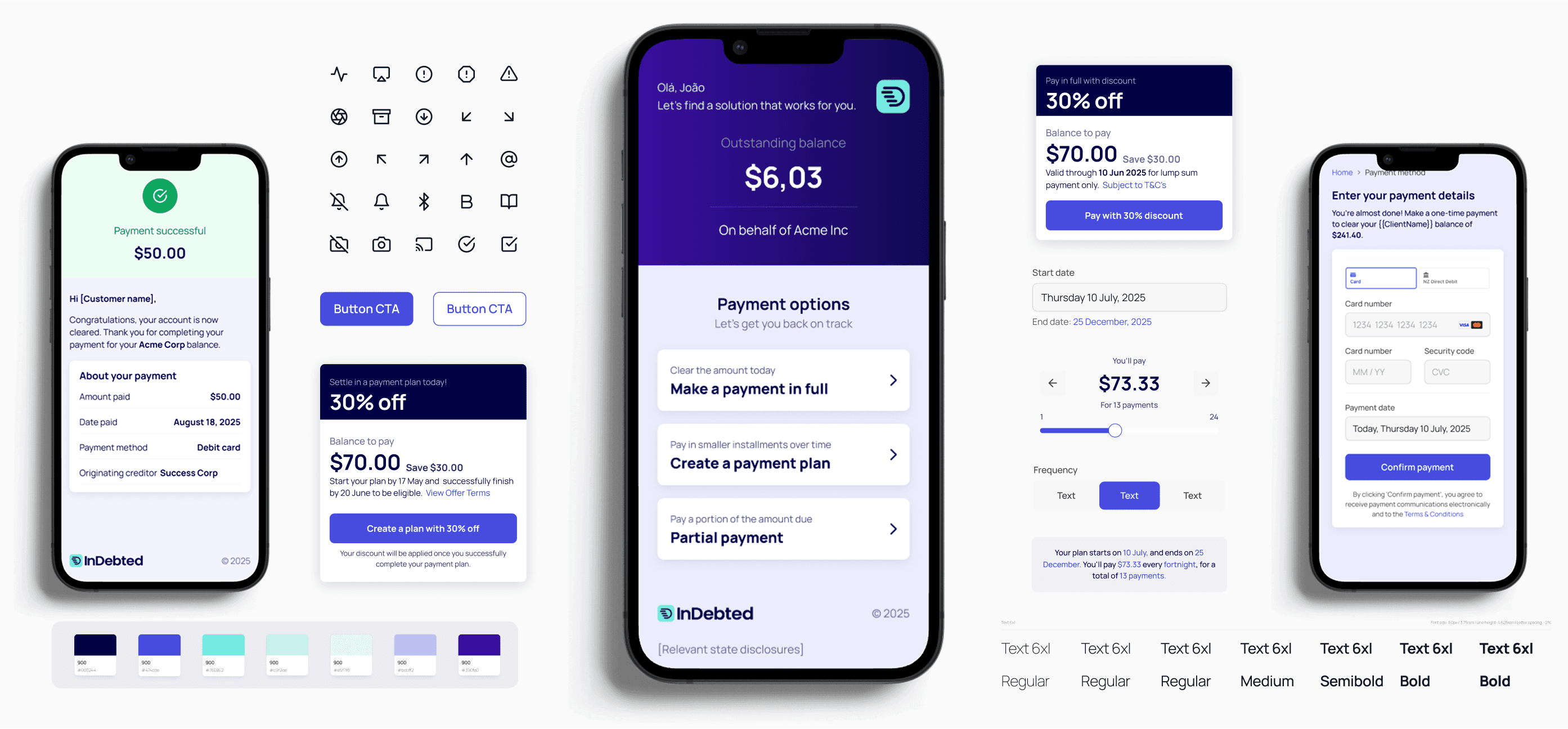
We redesigned the flow into a single-screen experience where customers could select and confirm their plan in one place plus updating inDebted brand uplift.
This simplified the journey and reduced friction.
For first-time users, it could feel overwhelming, but we tracked success and key metrics to balance simplicity with usability.
New payment plan results
uplift in overall conversion
Screen payment plan set up
A/B test
Markets that we first shipped
🇳🇿 🇨🇦 🇲🇽 🇦🇪
Conversion
Old: 14.1% conversion (14,508 of 102,740)
New: 25.8% conversion (3,847 of 14,891)
Average Recovery time
Old: 175 days
New: 58 days
Max Recovery time
Old: 7063 days (19+ years)
New: 487 days
Average instalment
Old: $66.35
New: $72.40
Wrapping up
This project started as a UX improvement but evolved into a full platform rebuild.
From MVP: a modest uplift (+0.9%).
Through alignment workshops: a shift to architectural reset.
To launch: a scalable, rebranded system that boosted conversion, reduced recovery time, and gave customers more control.
Key learnings
Lean design delivers real impact: Each MVP was scoped for fast learning, not just polish
Self-service is scalable UX: These tools didn’t just reduce support but strengthen the brand
Compliance can drive clarity: Constraints helped us design cleaner, user-initiated flows
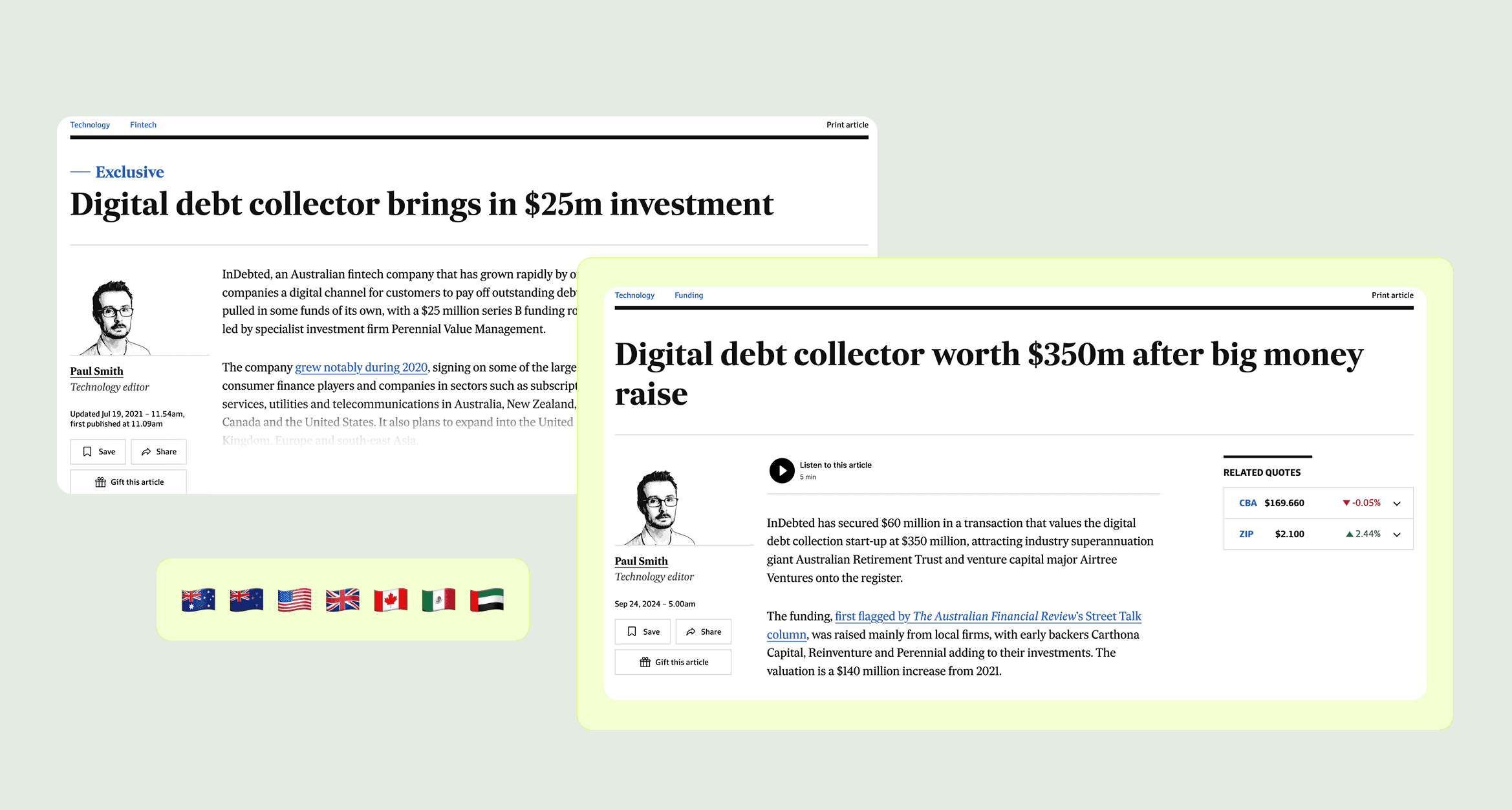
This project was one of several key initiatives that helped the business secure multiple successful funding rounds, driving its valuation from $140M to $350M.