From early product to global architecture
Role
Product Designer
Company
Alcidion
Type
Research, UX, UI, Concept testing
Impact
Operational efficiency
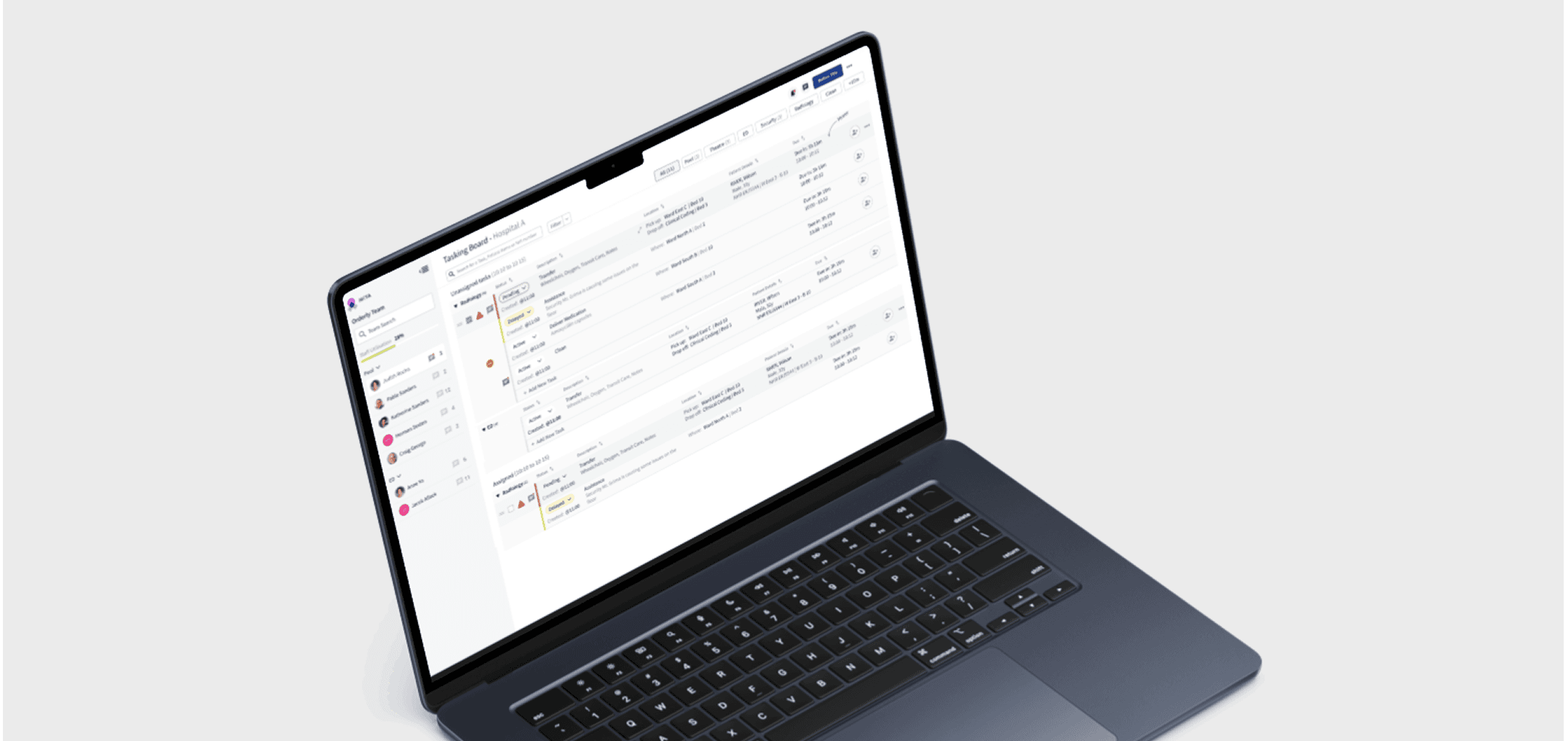
Smartpage is a hospital-based web and smartphone communication system that replaces pagers. It supports clinical and non-clinical staff by streamlining task management, workload distribution, and urgent communications.
The project focus was to optimise communication between non-clinical staff and reduce risks caused by missed or delayed urgent tasks.
My role
I led the Smartpage Task Management uplift as Senior Product Designer, partnering with Clinical Operations, Engineering, and Compliance.
I owned:
Discovery: mapping current workflows and defining problem statements
Qualitative research: interviews, concept testing, synthesis, share-backs
Framing opportunities and shaping design hypotheses with product leadership
Designing and testing solutions for task prioritisation, urgency signals, and team coordination
Research approach
We set out to build a shared understanding of how staff managed tasks and communication on the ward floor.
Methods used:
Current state mapping
In-office research with staff
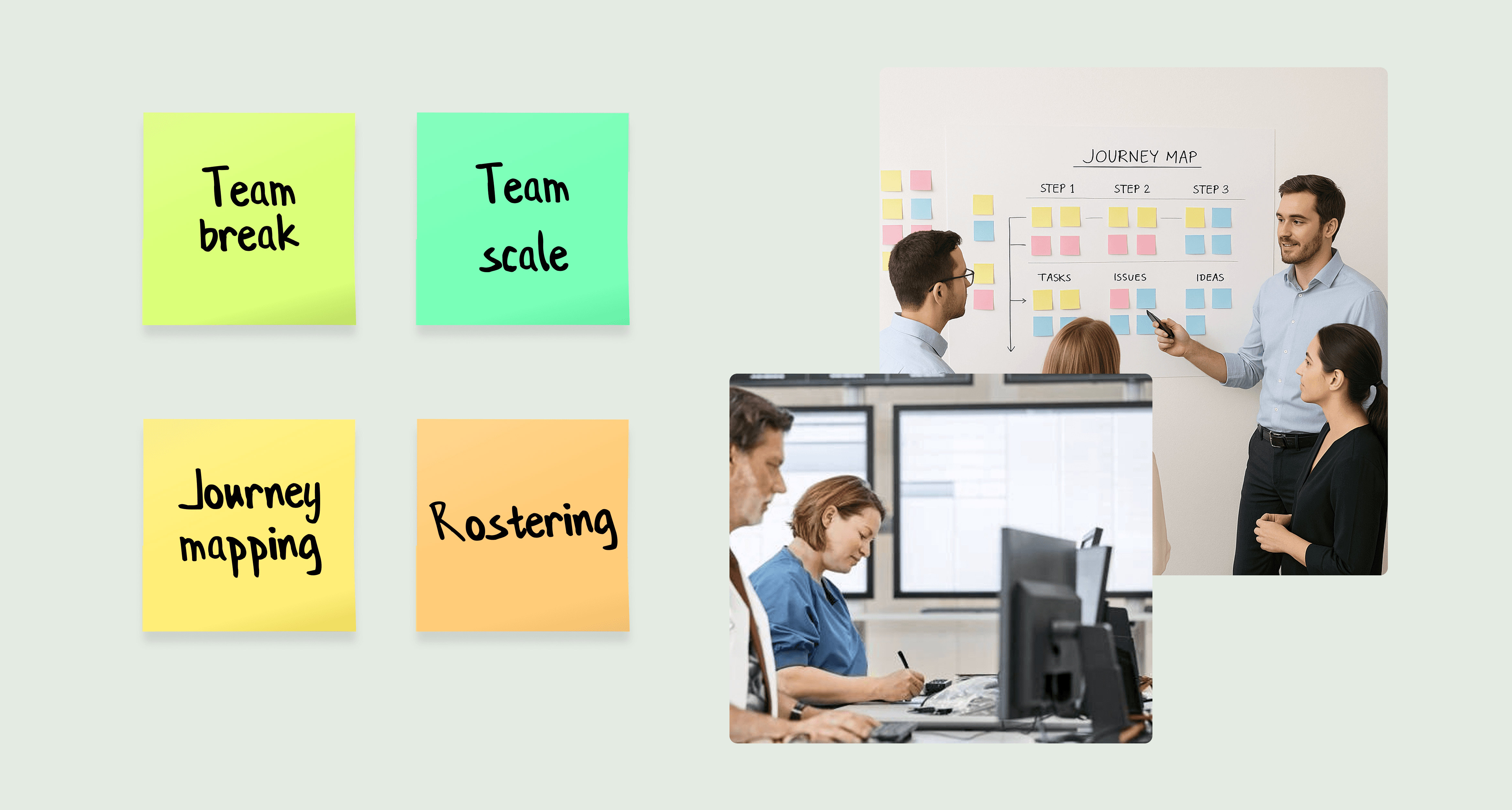
Journey mapping to highlight pain points
Concept testing to validate design hypotheses
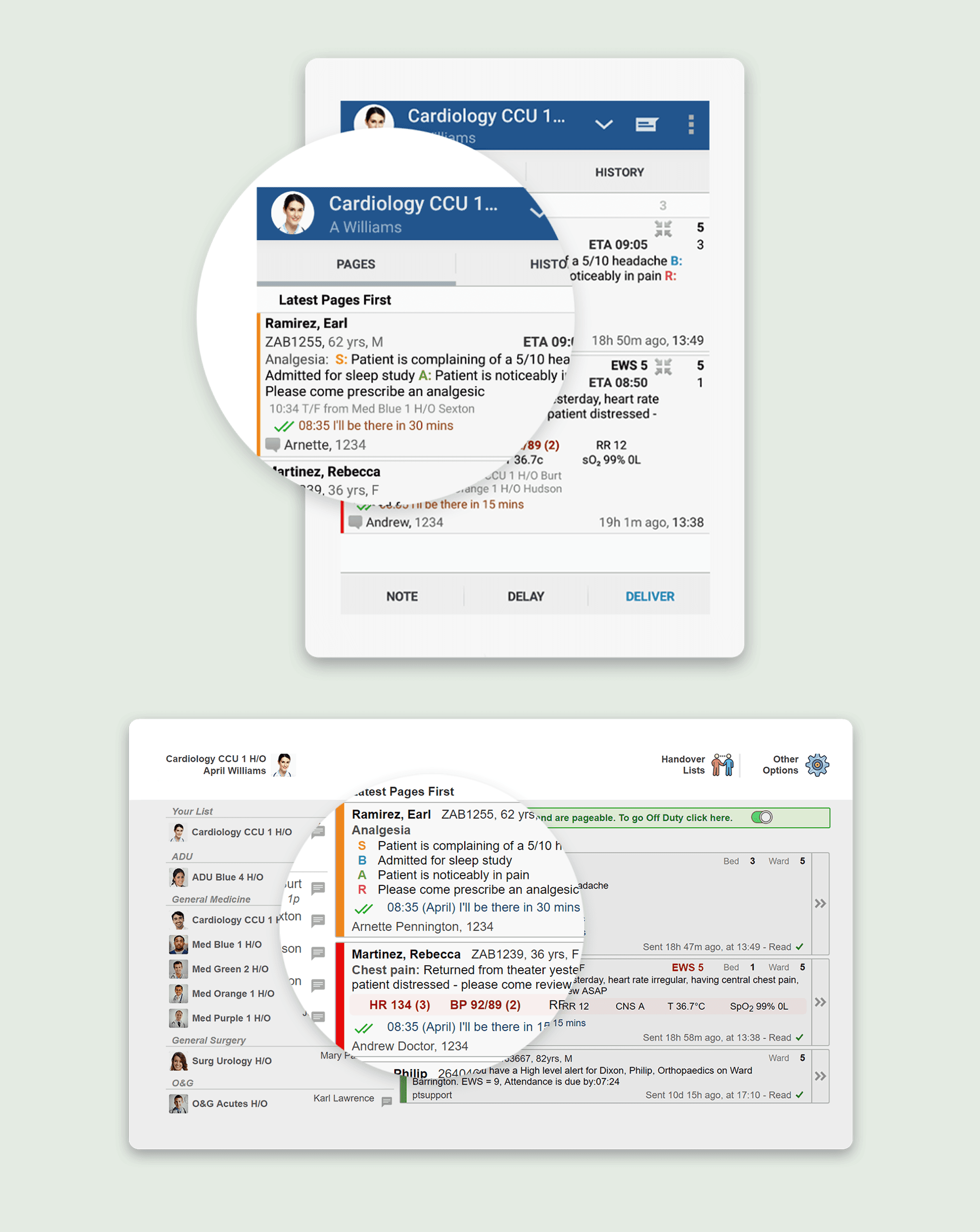
Current experience analysis
Assigning, reassigning, cancelling, and completing tasks.
Managing team breaks and balancing workload.
Monitoring and responding to external requests.
Defining team locations and overall structure.
SME's internal research
We ran journey-mapping workshops with SME nurses and sales staff who work closely with hospital teams. These sessions helped us identify the flow of work, highlight critical moments of friction, and map out the jobs to be done.
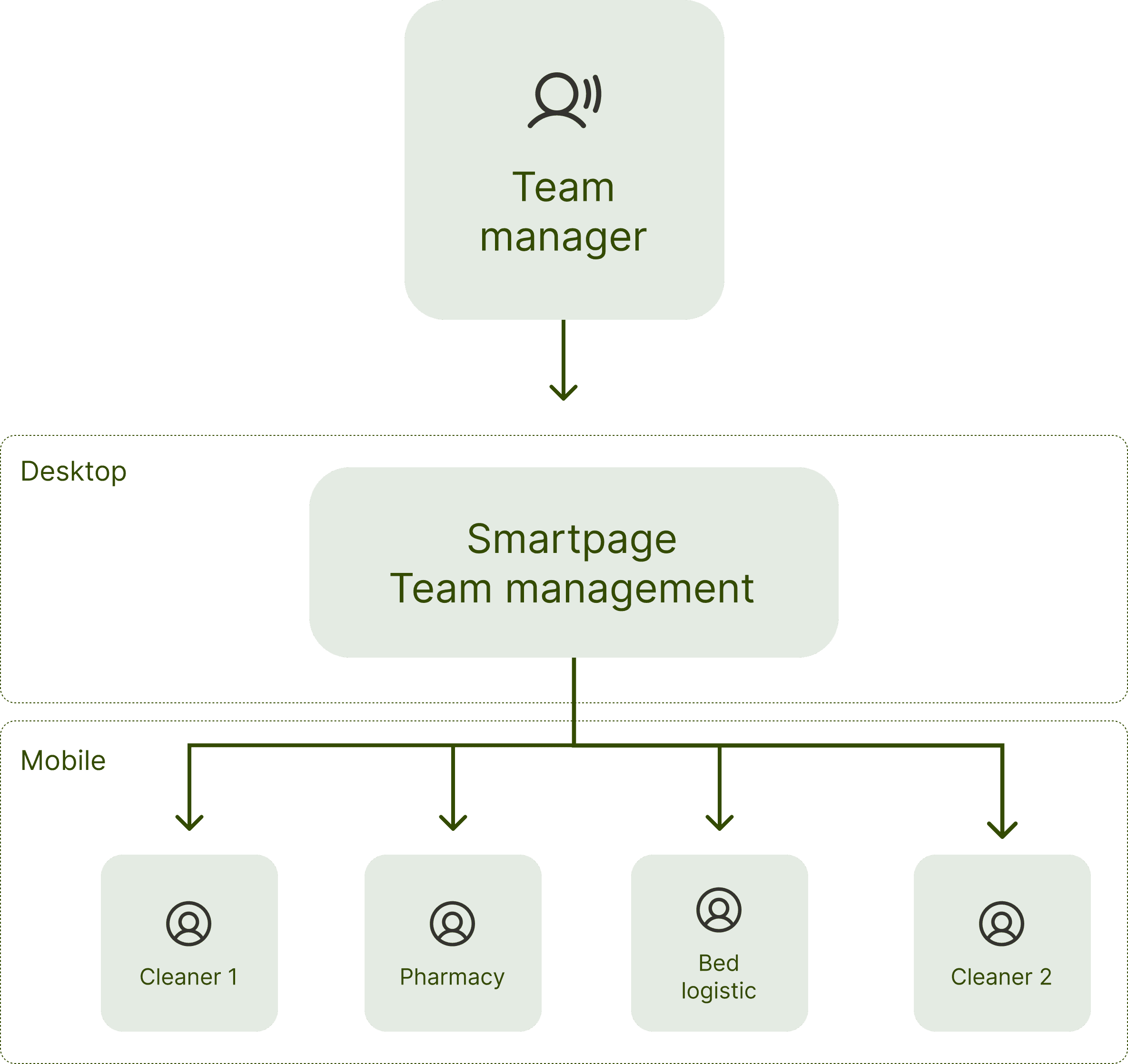
Jobs to Be Done (Team Manager)
Create tasks.
Manage tasks: assign, reassign, cancel, and complete.
Manage workload: breaks, staffing balance.
Monitor and respond to external requests.
Define and maintain team structure: locations, roles, responsibilities.
Design approach
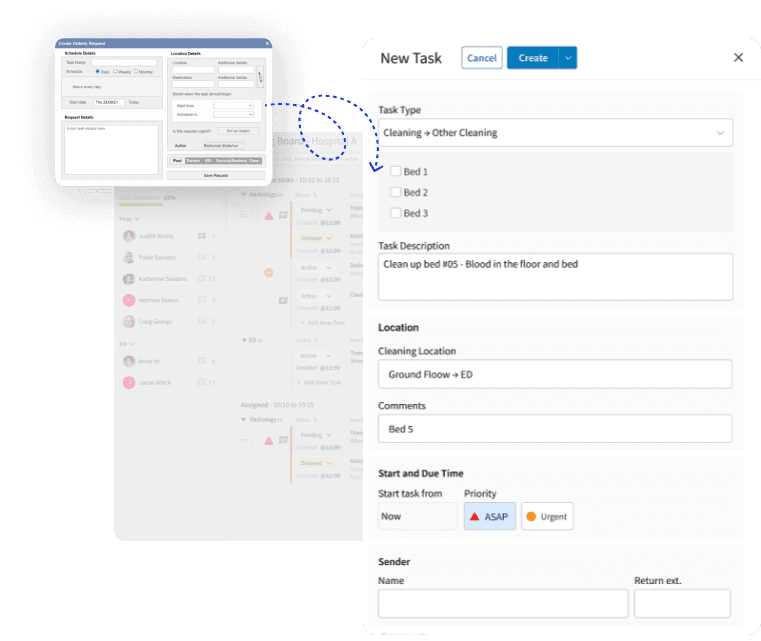
Side panels with simple urgency tagging streamline task creation
This view allows the manager to visualise the list of tasks and help them to prioritise urgent tasks agaisnt time-bound tasks
Side panels with simple urgency tagging streamlines task creation
This view allows manager to visualise the list of tasks and help them to prioritise
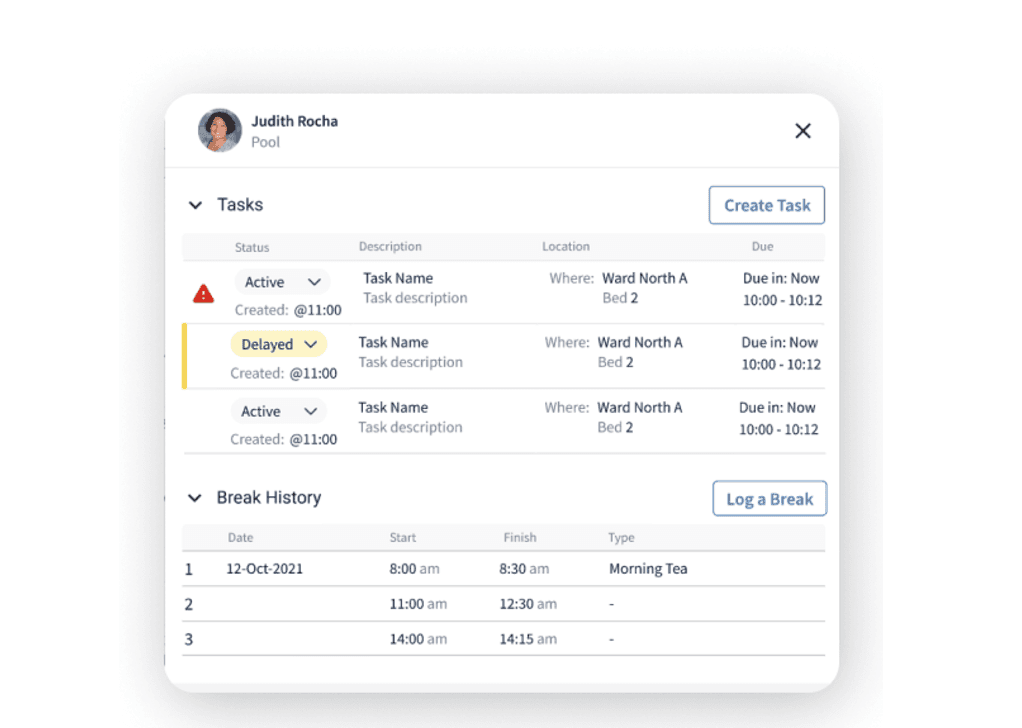
Quick task visualisation and ability to log break
Logging in break is important for team leaders due to work compliance rules. It is important that this workers take frequent break but still manage to address urgent task or reassign them to other orderlies in the floor.
Design system
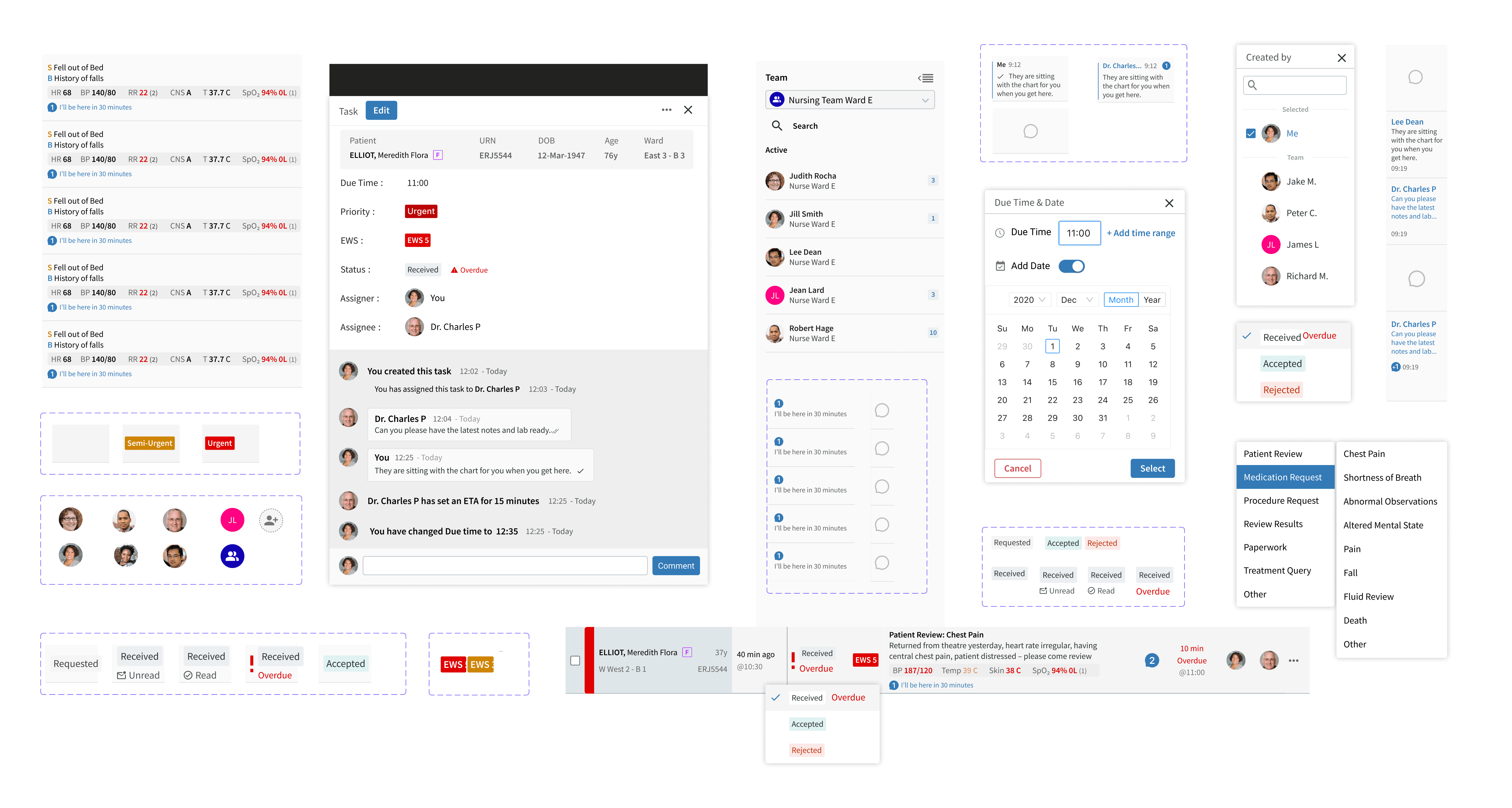
I worked with engineers to create a shared system for web and iOS, ensuring the tool could scale and stay consistent. The focus was on reusable parts, alignment with dev practices, and lightweight management to keep it sustainable.
Highlights:
Built reusable components and tokens across platforms
Partnered with engineers on accessibility and behaviours
Set up light docs and guidelines for easy maintenance
Embedded system in daily work → faster, more consistent delivery
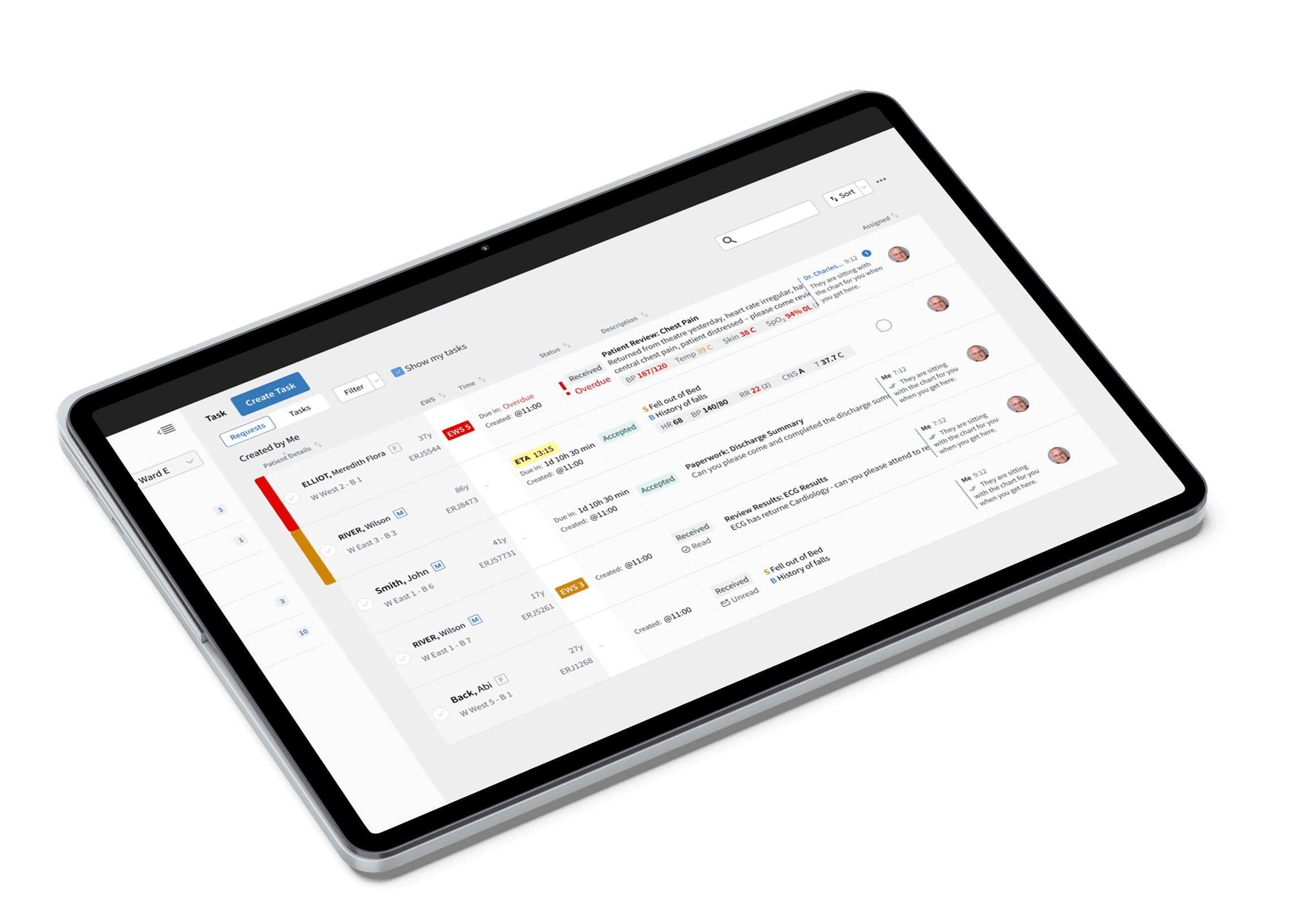
Next design phase
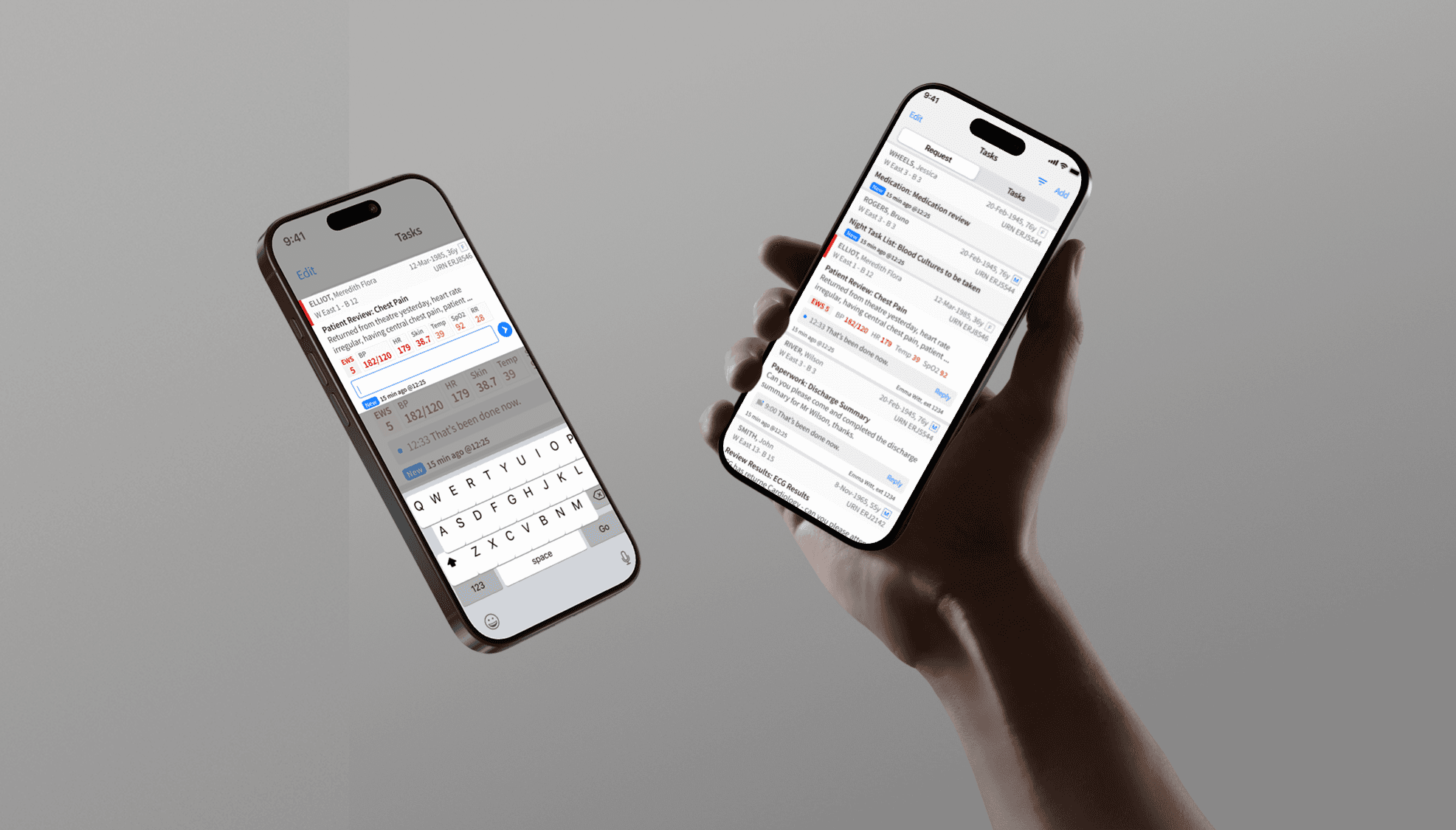
Create mobile experience for the worked on the floor. Find part of the work below.
Key learnings
Task visibility is as important as urgency. Staff needed clear ownership, status, and critical items at a glance.
Colour alone isn’t enough. We combined icons, labels, and grouping for urgency.
Handovers are high-risk moments. Structured prompts reduced missed tasks.
Compliance and care are linked. Features like break logging improved wellbeing while ensuring safety.
Alignment drives better solutions. Journey mapping workshops created a shared view across clinical leaders, engineers, and product.